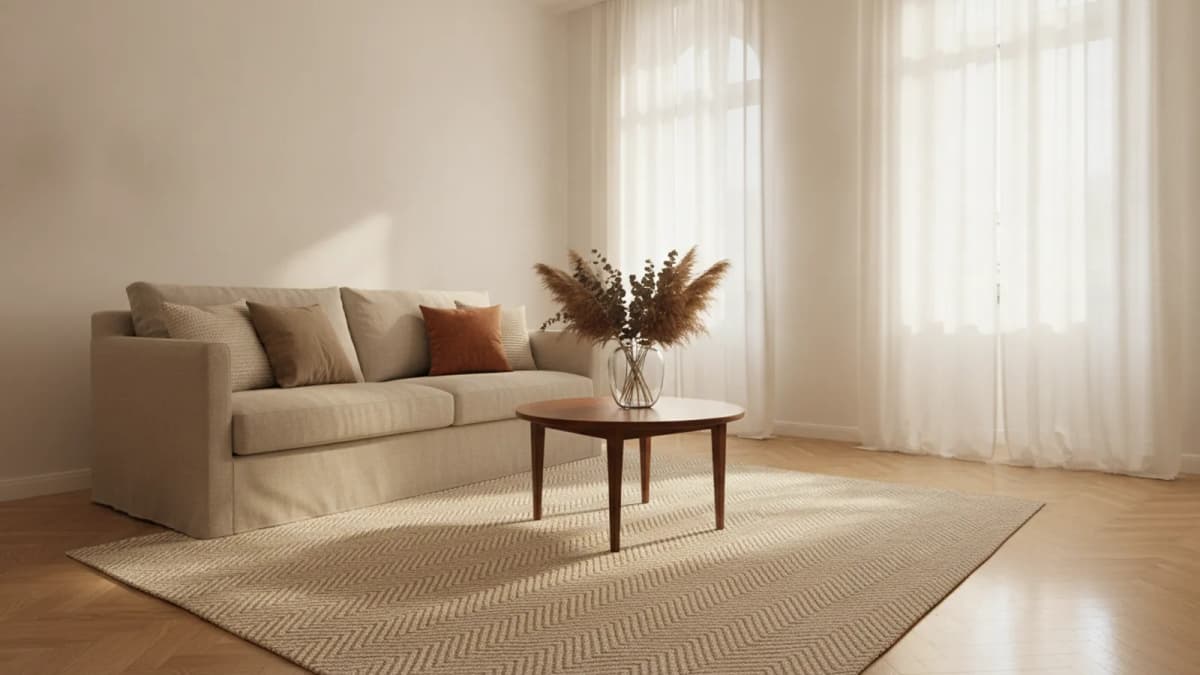
A home stager is the professional who prepares a home for sale or rent: they clear the clutter, tidy up, dress the rooms with furniture and accessories and make the property photograph well, so that anyone looking at it online or on a viewing can picture their own life there. They don't design from scratch and they don't renovate. They work with what is already there, on short timelines and modest budgets, and their real client is often the real estate agent. In most markets there is no licence or mandatory qualification: what you need is an eye for space, colour and light, solid organisational skills, a network of suppliers and a before-and-after portfolio. What a stager earns depends on how many jobs they close and on how they price them, not on an official pay scale. This guide walks through the job step by step, the ways stagers get paid, the training that actually helps and how the first clients arrive.
Who a home stager is (and what they are not)
Home staging began as a real estate marketing technique: the home is not furnished for whoever lives in it today, but for whoever might buy it tomorrow. The home stager turns that goal into concrete decisions: what to remove, what to move, what to add and how to photograph the result. The work is measured by a single yardstick: how much easier the property becomes to sell or rent.
It helps to tell the stager apart from neighbouring roles, which people often mix up.
| Aspect | Home stager | Interior designer | Interior decorator |
|---|---|---|---|
| Goal | Sell or rent the property | Design the space for the people who will live in it | Enhance an existing room |
| Typical client | Agent, seller, developer | Private client, company, hospitality business | Private client |
| Length of the job | Days or a few weeks | Weeks or months | Days or weeks |
| What they do | Tidying, temporary styling, small touch-ups | Layout, services coordinated with engineers, furniture, lighting, materials | Textiles, colour, accessories |
| Furniture | Often rented or reused | Specified and bought to stay | Chosen to stay |
| Key skills | Reading the market, styling, photography, speed | Design, software, building rules, site supervision | Taste, colour, materials |
In practice a home stager does not sign off drawings and does not touch structure or services. When works are needed, they tell the owner and hand over to a qualified tradesperson. If you want to see where real design work begins, read about the full scope of the interior design training path.
What a home stager does, step by step
Every job follows roughly the same sequence. What changes is how much time each phase takes, not the order.
- Site visit. You tour the property with the owner or the agent, photograph everything, measure rooms and windows and note visible flaws: stains, cracks, lights that don't work, smells.
- Target analysis. Who will buy this home? A young couple, a family, an investor who will rent it out? The answer shapes every choice, from what the second bedroom is used for to the style of the accessories.
- Quote and plan. You propose a scope of work with clear edges: what comes out, what comes in, who handles minor repairs, when the photos are taken and when everything is taken down.
- Decluttering and depersonalising. This is the least glamorous part and often the most effective: family photos, collections, surplus furniture and objects on every surface go. The space should feel larger and neutral.
- Styling. Furniture and accessories are placed so each room has a clear function: a table to eat at, a desk to work at, a bed that looks properly made. Light, textiles and a few well-chosen objects do the work.
- Photo shoot. The photographs are the final product: many potential buyers see the home on a listing site before they ever visit. That is why many stagers work with an interiors photographer they trust.
- De-staging. Once the property is sold or let, rented furniture goes back. Build this phase into the quote too, with its time and cost.
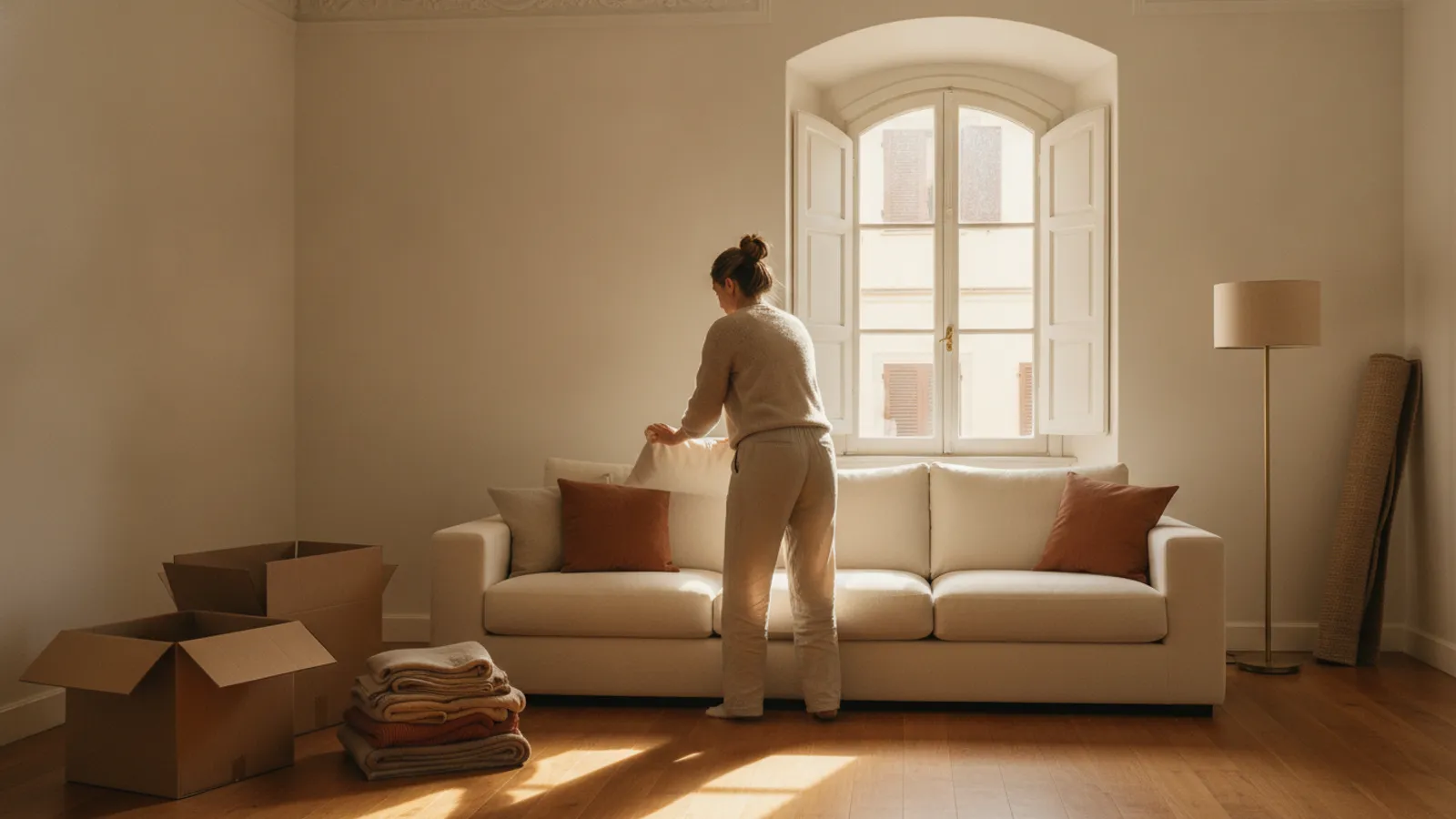
Empty home or lived-in home? These are two different jobs. In an empty home you have to bring almost everything, and logistics weigh heavily: transport, assembly, furniture insurance. In a lived-in home you mostly work by subtraction and with the existing furniture, but you need tact: you are moving someone's belongings, and the home has to stay tidy for the whole time it is on the market.
Virtual home staging: the job also moves onto the screen
Virtual home staging means furnishing the photograph of an empty room digitally. It is done with a render built on a 3D model or with artificial intelligence tools that place furniture into a photo. It costs less than physical staging, needs no transport and lets you show two or three options for the same room.
It has clear limits, though. Visitors will walk into empty rooms, so the gap between listing and reality has to be managed: digitally furnished images should be labelled as such in the listing (many portals and agents expect it), and the furniture must look believable against the real measurements, otherwise the buyer feels misled at the first viewing. Done well, virtual staging needs the same skills as physical staging plus command of a visualisation tool. To see how photorealistic images are built with AI, start from our guide to AI interior design rendering.

How much does a home stager earn?
The honest answer is that there are no reliable official statistics on home stagers' income: it is a young profession, almost always practised as a freelancer and often alongside other work such as interior design or furnishing advice. The figures that circulate online come from industry websites and vary widely, so it makes more sense to think about the factors that drive revenue than about an average number.
Income depends mostly on the number of jobs you can close each month, and so on ongoing relationships with agents and developers; on the location, because in livelier property markets homes change hands more often; and on your pricing model. These are the most common ones.
| Model | How it works | When it makes sense |
|---|---|---|
| Consultation | A visit and a written report with recommendations the owner carries out alone | Lived-in homes, tight budgets, a first contact with an agency |
| Fixed project fee | One price to style the whole property, with materials and photography included or excluded | Standard jobs on similar apartments |
| Per square metre or per room | The price grows with floor area or the number of rooms styled | Properties that differ a lot in size |
| Furniture rental | Monthly fee for furniture and accessories for as long as the home is on the market | Empty homes, when you own your own storage |
| Virtual staging | A price per edited image | Empty, distant properties, or to test several styles |
Many professionals combine two models: a fixed fee for the styling plus a monthly rental for the furniture. To set your own prices with a method, the same criteria apply as in any design service: the cost of your time, direct costs, margin and positioning.
What training do you need to become a home stager?
In most markets home staging is not a regulated profession: there is no chamber to join, no state exam and no certificate that carries mandatory legal weight. Anyone can register as self-employed and offer staging services (check the rules for freelancers where you live); what sets people apart is skill, and clients judge it from the portfolio.
The skills that really matter fall into two families.
- Design skills. Reading space and circulation, furniture proportions, using colour, natural and artificial lighting, choosing materials and textiles. These are the basics of interior design applied to a commercial goal.
- Commercial and operational skills. Knowing your local property market, speaking the agents' language, estimating time and costs, managing suppliers, transport and storage, shooting or commissioning interior photography and promoting your work on social media.
A home staging course or an interior design course? A short home staging course teaches the staging method and how to work with agencies, and is useful if you already have a design base. If you are starting from zero, the missing skills are those of interior design: without being able to read a space, balance colour and light or imagine an alternative layout, staging remains a tidying job. The most solid route is to start from the fundamentals of design and add staging as a specialisation. It also widens your market: someone who can design can offer a buyer the design of the home they have just bought.
How to find your first clients
The first year is mostly about building relationships. The channels that work are few and concrete.
- Real estate agencies. The main channel, because they have a steady flow of listings and a direct interest in selling fast. Approach them with a concrete case, ideally a before and after of a home in their area.
- Developers and builders. A styled show flat on a new development helps sell all the others. These are more structured jobs and are often repeated.
- Owners selling privately. You reach them with useful social media content and word of mouth. Budgets are lower, but they decide quickly.
- Short-term rentals. Anyone listing a property on the booking platforms needs photos that convert and a look that stands up to guests: a market close to furnishing a small guesthouse.
In every case your calling card is the portfolio: three or four cases with before and after photos, taken from the same angle and in the same light, plus a line on the result achieved if the client agrees. Your first homes can be those of friends and family, as long as you document them carefully.
Registering as a business. To work on a continuing basis you will need to register as self-employed or set up a company, in line with the rules and tax codes of the country where you work. A local accountant can tell you which activity category fits staging, alone or alongside interior design.
The most common beginner mistakes
- Furnishing to your own taste instead of for the property's target buyer: staging is not a personal showcase.
- Adding too much. A home full of objects looks small and distracts from the space, which is what you are selling.
- Neglecting light. Blown bulbs, heavy curtains and different colour temperatures in the same room weaken any styling.
- Underestimating logistics. Transport, assembly, insurance and collection of furniture all have a cost that belongs in the quote, not in your margin.
- Improvised photography. Excellent staging photographed badly does nothing for the listing.
- Promising sales results. Price and time on the market depend on the market and the agent: the stager improves presentation but cannot guarantee the outcome.
- Not putting everything in writing. Scope of work, rental period and responsibility for the furniture must be agreed before you start.
Frequently asked questions
What does home stager mean?
It is the professional who practises home staging, that is, preparing a property for sale or rent. The term comes from "to stage": the home is dressed like a set, for the people who will look at it.
How much does home staging cost a seller?
It depends on the floor area, how much furniture has to be brought in and how long it is rented for. A consultation on a lived-in home costs far less than a full styling of an empty apartment. The right way to find out is to ask for a quote after a site visit.
Do you need a licence or qualification to be a home stager?
In most markets, no. It is an open activity. A serious training and a documented portfolio are what the market looks at.
What is virtual home staging?
It is the digital furnishing of photos of an empty home, done with renders or AI tools. The images should be labelled as edited and must respect the real size of the rooms.
Can you stage a home someone is still living in?
Yes, and it is the most common case. You work mainly by subtraction, with the existing furniture and a few added accessories, asking the owners to keep everything tidy for the whole viewing period.
Are home stager and home staging the same thing?
No: home staging is the technique, the home stager is the person who practises it.
From home staging to interior design
After the first few years, many home stagers notice that the most frequent request comes from people who have just bought: to design the new home. That is where full design skills are needed, from layout to lighting, from materials to working with contractors and suppliers. The EULE Institute Interior Design Master, with IDEI® certification and a personal mentor, starts from the fundamentals of interior design: the elements of space, colour, light and materials. It is the foundation that turns staging into a project and not just a styling job, and that lets you follow your client after the sale.