
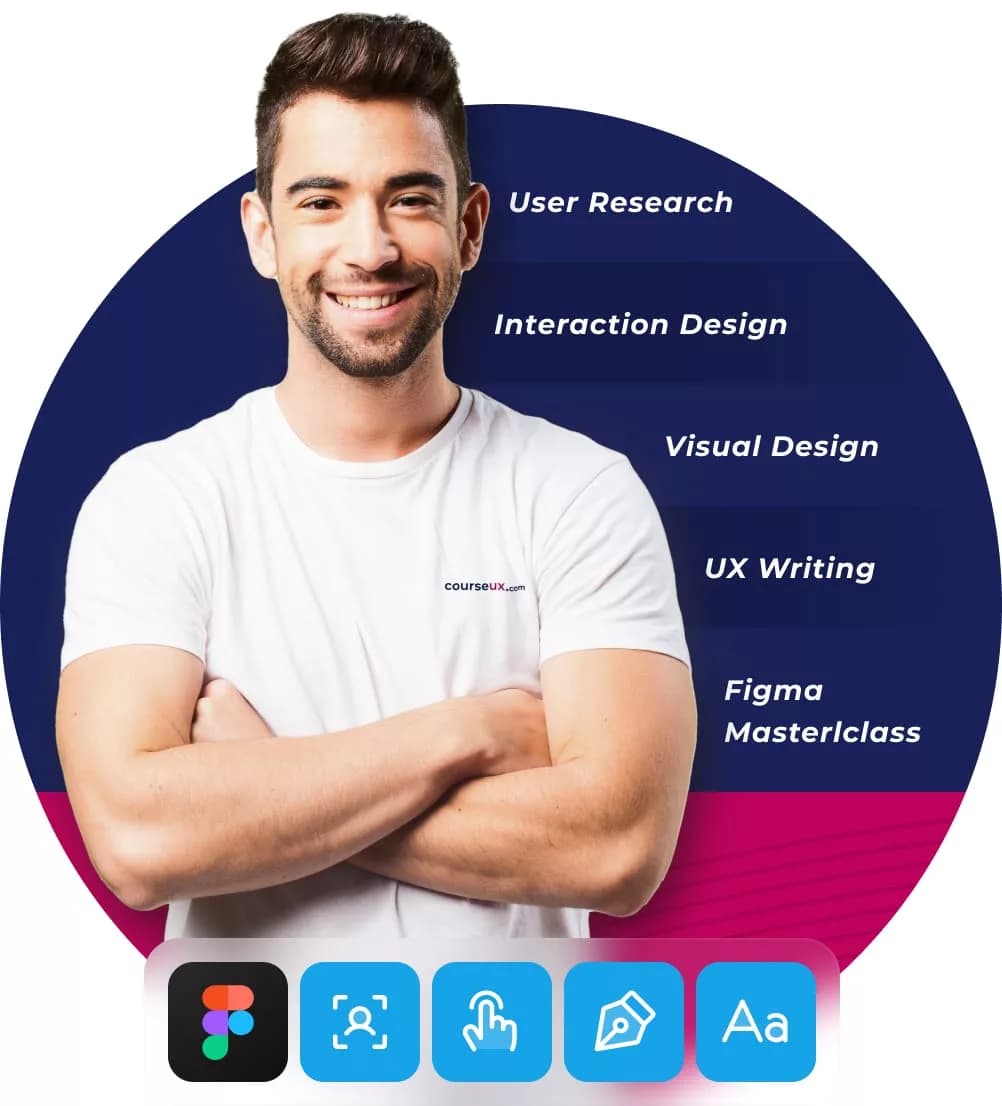
Becoming a UX Designer in 2026 isn’t about learning a single piece of software — it’s about learning to solve real problems for real people. The market is more mature than it was five years ago: companies no longer want someone who can “just make screens”, but someone who can understand a problem, frame it and design a measurable solution. The good news is that this path is completely accessible to beginners and career-changers, as long as you follow a logical order.
This guide lays out a realistic roadmap: what to study, in what order, how to build a portfolio that convinces, and what to expect from your first interview. No “become a designer in two weeks” promises — only the steps that genuinely work.
What a UX Designer Actually Does
UX (User Experience) is about making a digital product useful, usable and pleasant. A UX Designer doesn’t only draw the interface: they run user research, map flows, build prototypes and test them. UI (User Interface) — colour, typography, components — is part of the job, not the whole job. In small teams the two roles merge; in large ones they specialise.
Understanding this distinction is the first step to not wasting time. Many aspiring designers spend months copying beautiful but empty Dribbble shots, then arrive at interviews unable to explain a single design decision.
The Skills to Build, in Order
A solid path follows a precise progression. Skipping the fundamentals to jump straight to tools is the most common mistake.
- UX fundamentals: research, personas, user journeys, information architecture.
- Interaction design: flows, wireframes, prototyping and usability testing.
- Visual and UI design: grids, typography, colour, accessibility and design systems.
- Tools: Figma as your foundation, plus the basics of developer handoff.
- Soft skills: presenting and defending your choices with data and arguments.
In 2026 accessibility is no longer a “nice to have”: it’s a legal requirement in many markets and a clear signal of professional seriousness. Building it into your method from day one immediately sets you apart.
Building a Portfolio That Convinces
Your portfolio is your real CV. It’s not about how many projects you show, but how well you explain the reasoning behind two or three. A strong case study follows a clear structure: what the problem was, what you discovered, which alternatives you considered, what you decided and why, and — where possible — the impact it had.
A recruiter spends less than a minute on the first glance: your portfolio must demonstrate your thinking, not just the final result.
If you don’t yet have professional experience, personal projects and well-reasoned redesigns count for a lot — as long as you explain constraints and choices as if they were real. Three polished case studies beat ten shallow ones.
How Long It Really Takes
With consistent, guided study, six to twelve months is a realistic horizon to be ready for your first interview. People who go it alone, without feedback, often take twice as long and pick up bad habits that are hard to unlearn. Having a mentor review your work dramatically speeds up the learning curve, because it stops you from cementing mistakes.
Your First Job: What to Expect
Entry-level roles — junior UX/UI designer, junior product designer — mainly ask for method, curiosity and the ability to work in a team. You won’t be expected to be perfect, but to learn fast and welcome feedback. Expect questions about your process far more than about pixels: “why did you do it this way?” is the question that separates those who get hired from those who don’t.
Becoming a UX Designer in 2026 is absolutely possible from scratch. It takes an ordered path, a portfolio that tells the story of your decisions and, ideally, someone to guide you along the way. The rest is consistency.