Interior design styles are coherent sets of shapes, materials, colours and proportions that you can recognise at a glance. The fifteen people ask about most are modern, contemporary, minimalist, Japandi, Scandinavian, industrial, mid-century, boho, eclectic, Art Deco, classic, shabby chic, rustic, Mediterranean and coastal. Knowing them does two things: it gives a name to what you like, so you can look for the right furniture, and it lets you design a space where every choice belongs to the same conversation. Below you will find a summary table and, for each style, how to recognise it and a typical mistake.
What an interior design style is (and why it helps to know them)
A style is not a furniture catalogue: it is a set of implicit rules. It says which materials live together (pale wood and linen, iron and brick), which colours dominate, which shapes are allowed (straight lines, soft curves, mouldings) and how much empty space is left. That is why styles are recognisable even when the iconic piece is missing: what counts is proportion and consistency.
You need them at three moments: when you collect inspiration and want to understand what it has in common, when a client says "I like modern" and means something different from you, and when you have to decide on a purchase without the whole losing its sense. In practice almost no home is a pure example of a single style: most projects are a blend governed by one main style.
The 15 styles in one table
| Style | Palette | Typical materials | Mood |
|---|---|---|---|
| Modern | Neutrals with sharp contrasts | Steel, glass, lacquer | Functional, rational |
| Contemporary | Neutrals with trend-led accents | Wood, stone, natural fabrics | Current, evolving |
| Minimalist | White, greys, very restrained tints | Smooth surfaces, closed storage | Calm, essential |
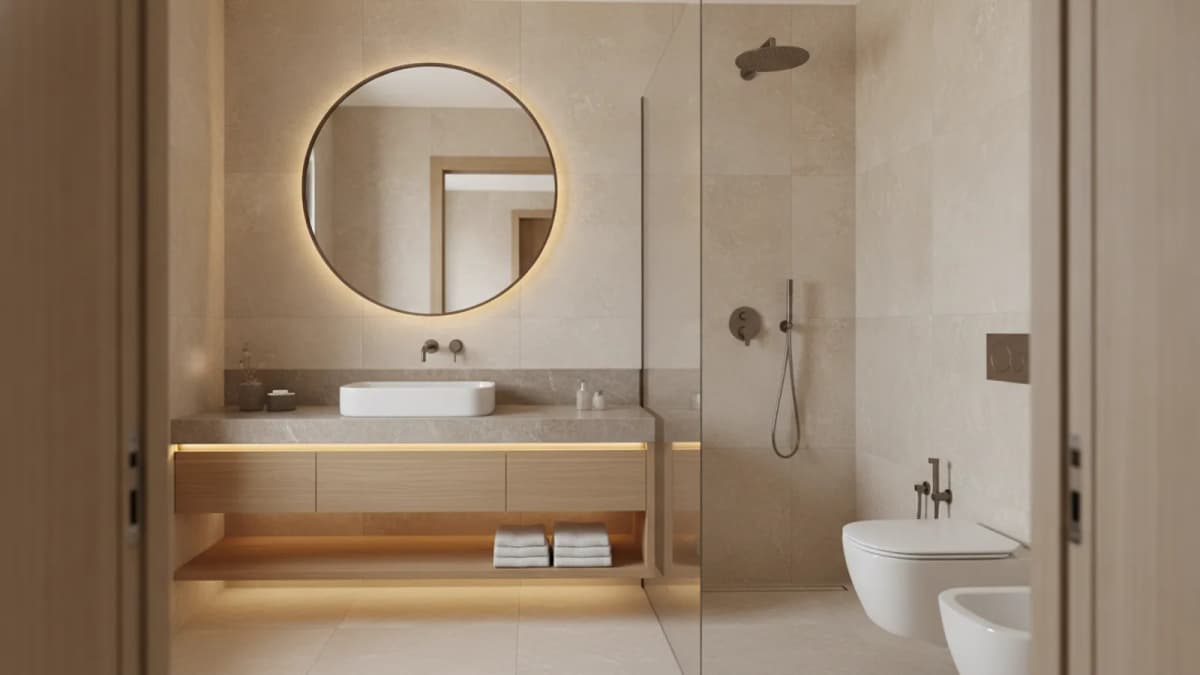
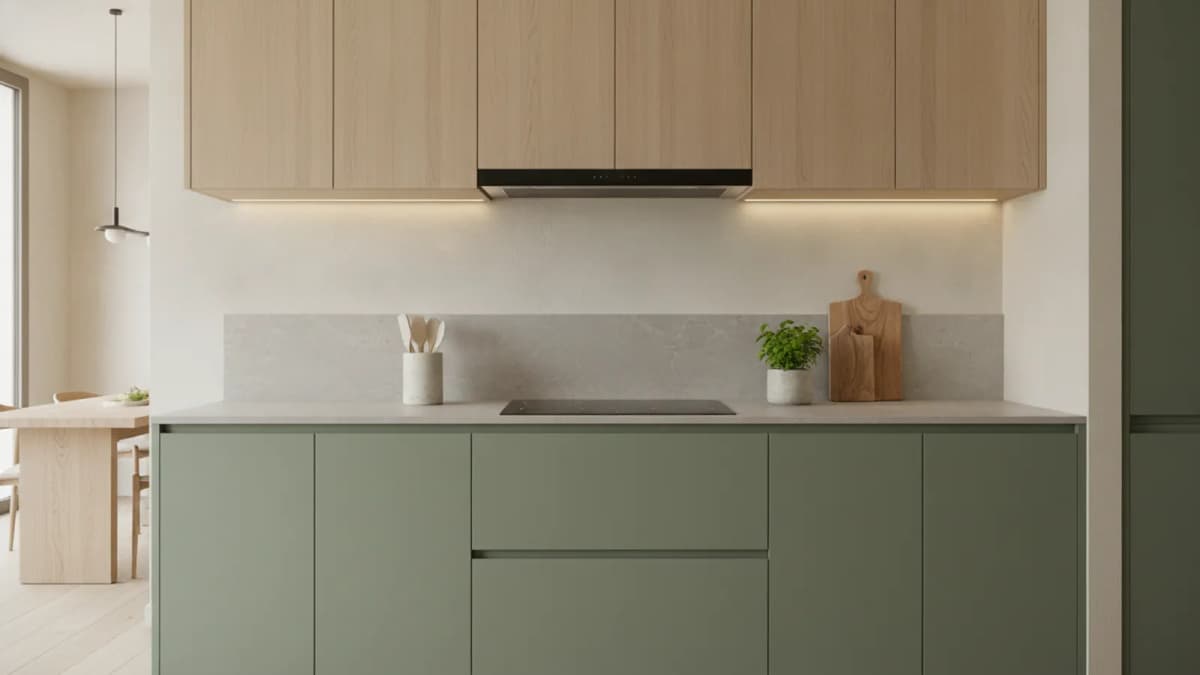
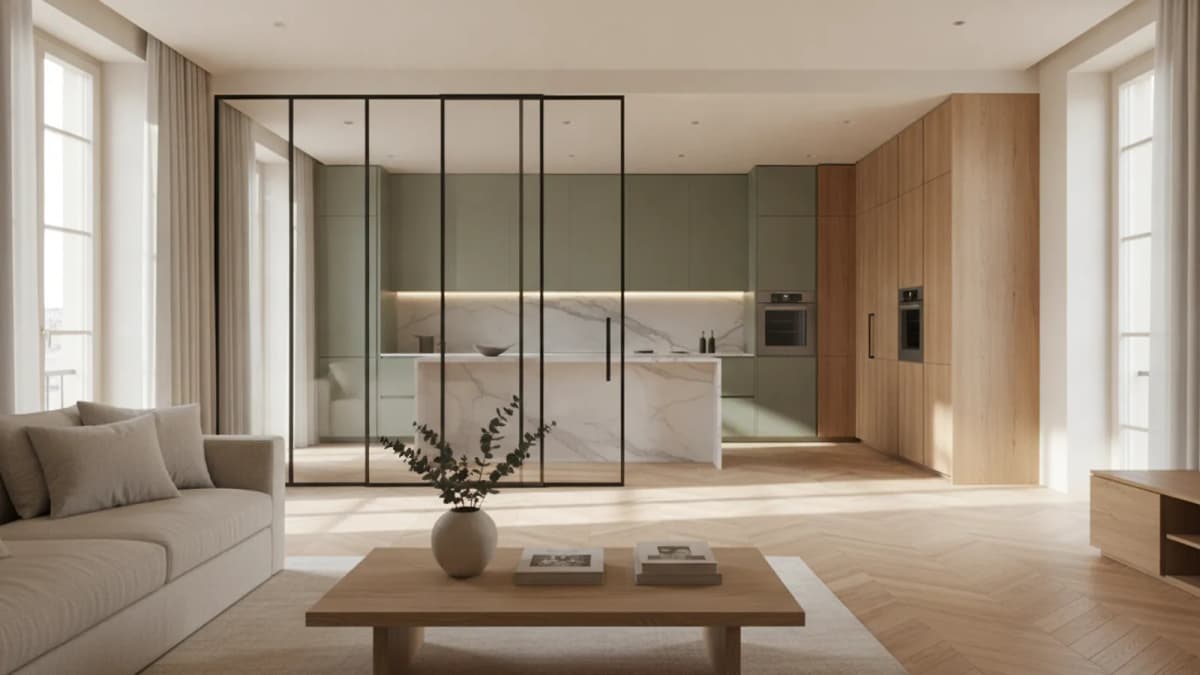
| Japandi | Beige, pale wood, sage green | Oak, linen, handmade ceramics | Quiet and warm |
| Scandinavian | White, light grey, pastels | Pale wood, wool, linen | Bright, welcoming |
| Industrial | Black, grey, rust, brick | Iron, concrete, brick, leather | Urban, raw |
| Mid-century | Teak and walnut with warm colours | Wood, textiles, brass | Optimistic, organic |
| Boho | Earth tones, ochre, saturated colours | Rattan, macramé, kilim, plants | Free, layered |
| Eclectic | Open, with a common thread | Mixes of different periods | Personal, lively |
| Art Deco | Black, gold, emerald, deep blue | Brass, velvet, marble, mirrors | Elegant, theatrical |
| Classic | Warm whites, dusty tints | Carved wood, marble, plasterwork | Formal, orderly |
| Shabby chic | White, ivory, pastels | Painted and distressed wood, linen | Romantic, soft |
| Rustic | Browns, earth, forest green | Solid wood, stone, terracotta | Warm, countryside |
| Mediterranean | Lime white, blue, terracotta | Ceramics, wrought iron, linen | Sunny, lived-in |
| Coastal | White, light blues, sand | Whitewashed wood, rope, cotton | Light, seaside |
The palettes are indicative: every style has variants, and contemporary versions soften many of the rules.
How to read the table: palette and materials are the two most reliable clues, because they change less than shapes do. If a room has brick, iron and leather, you are probably in industrial territory even without a single catalogue piece. If you see pale wood, linen and few things on show, the choice is between Scandinavian, Japandi and minimalist, and what tells them apart is the amount of warmth and imperfection: Japandi has more, minimalism almost none. Below, the styles are grouped by family, from the most recent to the most traditional.
Contemporary styles: modern, minimalist, Japandi and Scandinavian
Modern. The word points back to twentieth-century modernism: form follows function, surfaces are clean and decoration is kept low. Recognise it by straight lines, industrial materials such as steel and glass, and few colours with a few sharp contrasts. Typical mistake: calling "modern" everything that is recent. Modern is a precise historical reference.
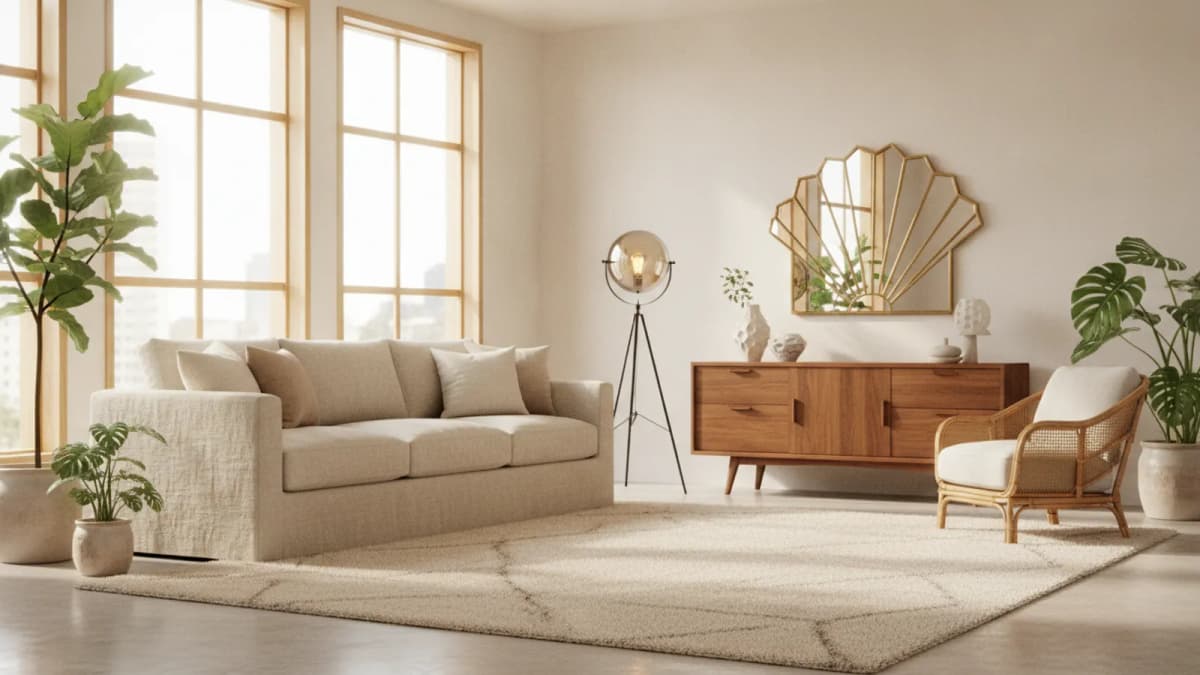
Contemporary. This is the style of today, and for that reason it changes. Recognise it by soft curves, natural materials, a neutral palette with accents of the moment, and technology that is built in and barely visible. Typical mistake: chasing every trend and ending up furnishing for one season.
Minimalist. It takes away instead of adding. Recognise it by clear surfaces, closed storage, a few chosen objects, a reduced palette and crisp lines. Typical mistake: forgetting texture. A minimalist room with no material in it (linen, wood, stone, plaster) turns into a cold, anonymous space.
Japandi. It joins Japanese essentialism and Scandinavian functionality. Recognise it by pale wood, linen, handmade ceramics, low simple shapes and an idea of beauty that accepts imperfection (wabi-sabi). Typical mistake: reducing it to a beige palette without the character of the materials.
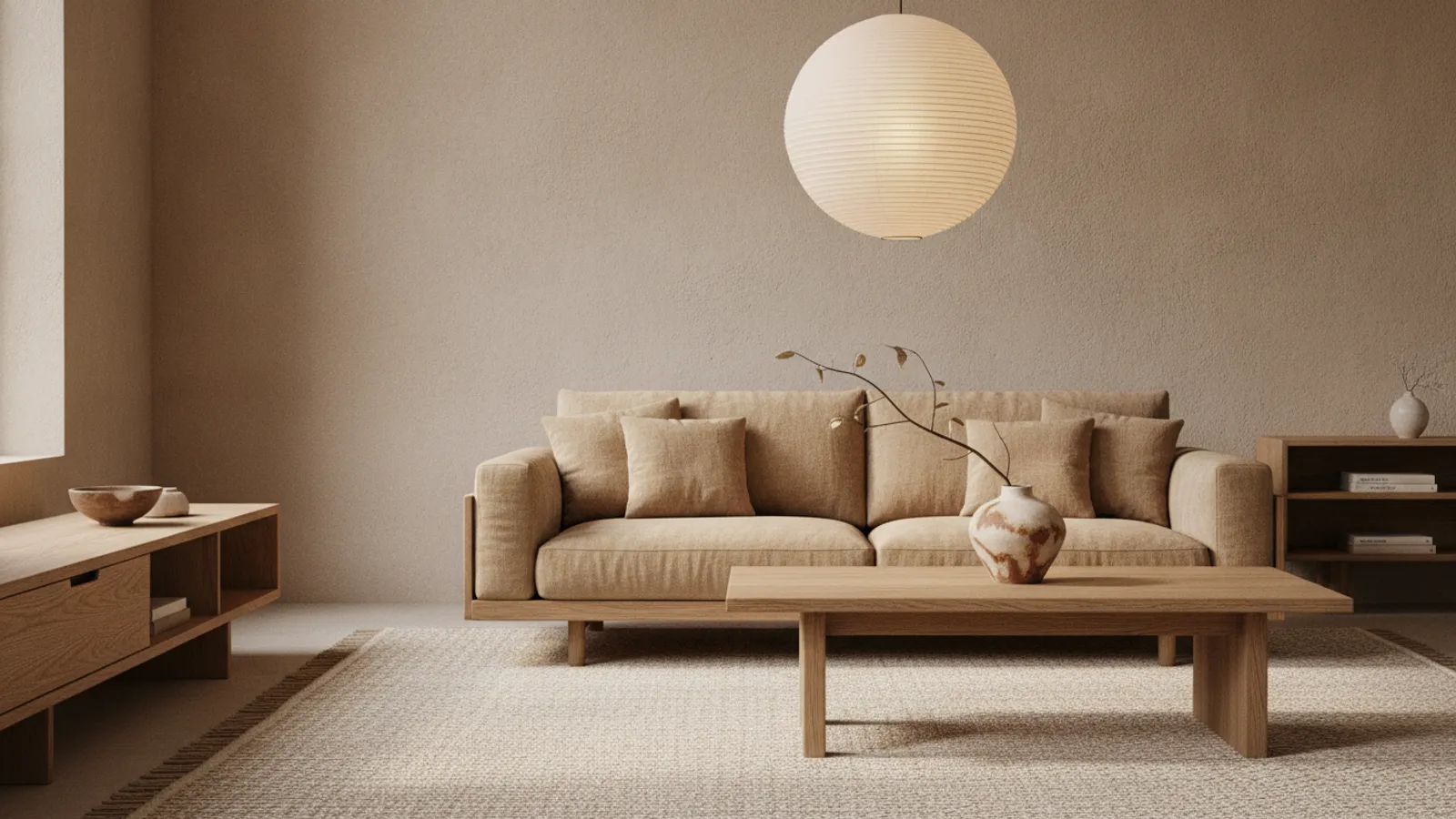
Scandinavian. It was born in the Nordic countries, where light is scarce and the home has to make the most of it. Recognise it by pale walls, pale wood, warm textiles such as wool and linen, functional furniture and many low-intensity light sources. Typical mistake: copying the look without the light, so the white turns cold and flat.
Styles with character: industrial, mid-century, boho, eclectic and Art Deco
Industrial. It comes from lofts carved out of disused factories and keeps their materiality. Recognise it by exposed brick or concrete, iron, black-framed glass, visible pipes and beams, and aged leather. Typical mistake: overdoing black and grey with no warm materials to balance them. It works if you set the raw against wood, textiles and warm light.
Mid-century. It refers to mid-twentieth-century design, roughly the 1940s to the 1960s. Recognise it by teak and walnut, tapered and splayed legs, organic shapes, warm colours such as mustard, olive green and burnt orange, and designers such as Charles and Ray Eames or Hans Wegner. Typical mistake: filling the room only with period pieces or reissues and ending up recreating a film set. Better two or three strong pieces in a sober setting.
Boho. Bohemian is a style of accumulation and travel. Recognise it by layered textiles (kilims, macramé, cushions), rattan and wicker, lots of plants, and earthy, saturated colours. Typical mistake: adding without selecting, which ends in confusion. A successful boho room always has a thread (a colour, a material) that ties everything together.
Eclectic. It mixes periods and origins on purpose. Recognise it by a contemporary sofa next to an antique console, pictures in different styles and a palette that returns in every room. Typical mistake: confusing eclecticism with having no rules. Without a shared criterion (colour, material, proportion) it is just disorder.
Art Deco. It took hold between the 1920s and 1930s and takes its name from the 1925 International Exhibition of Modern Decorative and Industrial Arts in Paris. Recognise it by geometry and symmetry, brass and gold, velvet, marble, mirrors and deep colours such as emerald and midnight blue. Typical mistake: piling on shine and gilding. Today it works with a few iconic pieces, for example a fan-shaped mirror or a velvet armchair, in a sober room.
Traditional styles: classic, shabby chic, rustic, Mediterranean and coastal
Traditional styles are tied to a specific place or period. They suit homes with strong architecture (decorated ceilings, beams, period floors), because they lean on what is already there instead of erasing it. In a recent home with no architectural features, they need to be used with more caution, through a few recognisable elements and not a full period set.
Classic and contemporary classic. The classic is made of proportion, symmetry and decoration: panelling, plasterwork, carved wood, statement chandeliers, marble. Contemporary classic keeps the elegant structure but simplifies the shapes, lightens the colours and mixes it with clean-lined furniture. Typical mistake: treating the home like a museum, with too many showpieces and too little liveability.
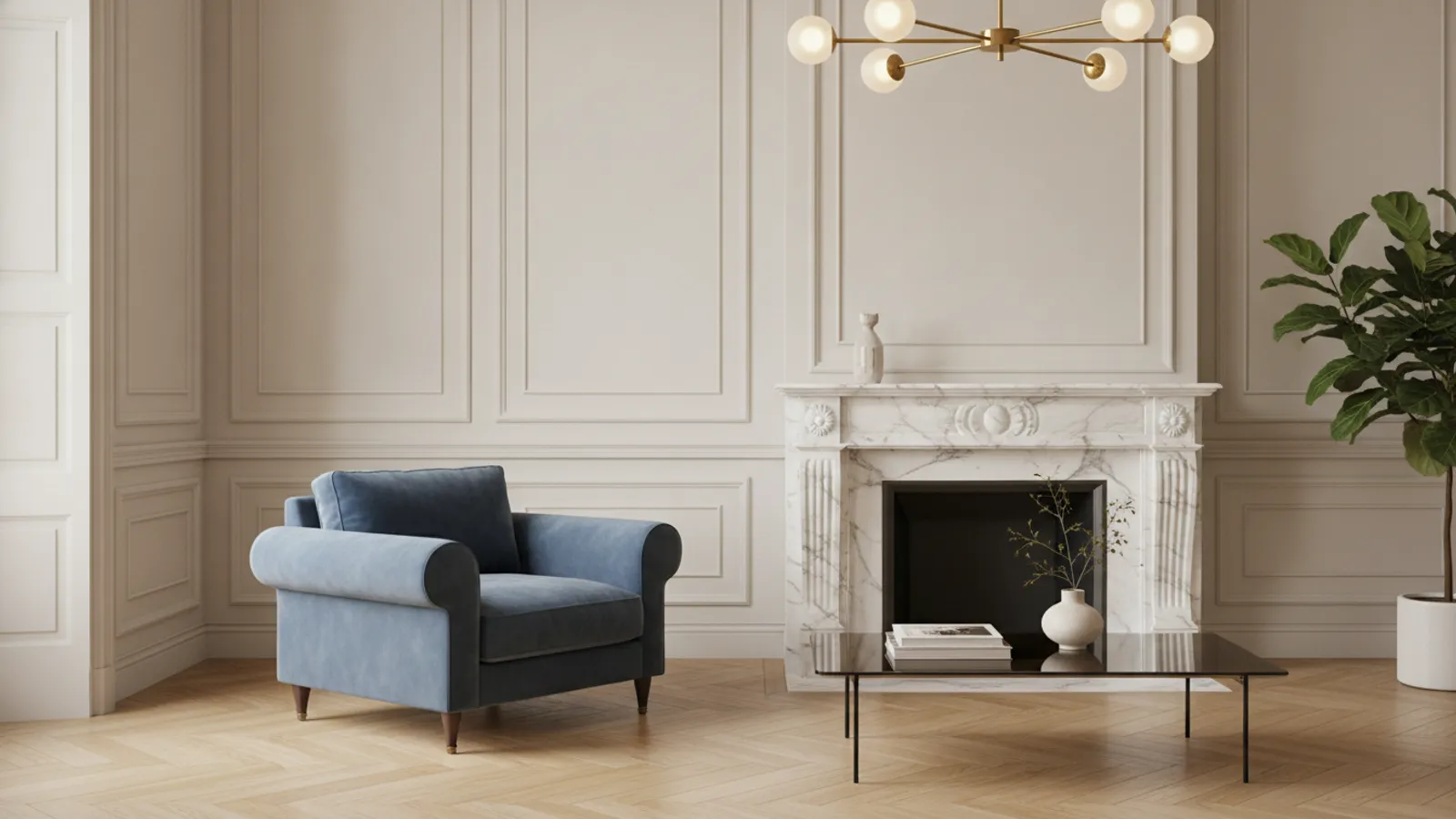
Shabby chic. It has a romantic, worn-in look. Recognise it by furniture painted white, ivory or pastel and showing signs of age, linen and cotton, flowers, chandeliers with pendants. Typical mistake: buying mass-produced "distressed" furniture, which has none of the history the effect is meant to suggest.
Rustic. The country or mountain home. Recognise it by solid wood, exposed beams, stone, terracotta, a fireplace and sturdy textiles. Typical mistake: using dark wood everywhere in low, dim rooms, which become gloomy. Offset it with pale walls and well-distributed light sources.
Mediterranean. It tells the story of the South, with light, lime and material. Recognise it by lime-white walls, blue and terracotta, decorated ceramics, wrought iron, linen fabrics and terracotta or majolica floors. Typical mistake: falling back on souvenir objects. Good Mediterranean style lives on real materials more than on themed decoration.
Coastal. The seaside style, lighter and airier than Mediterranean. Recognise it by white, light blues and sand, whitewashed wood, fibres such as rope and jute, and linen. Typical mistake: filling the room with anchors, shells and nautical stripes, which turn the effect into a themed shop window.
How to work out your own style
You don't need a test to find out: you need to look at what you already choose. A method in four steps:
- Collect thirty images of rooms you like, without overthinking it. Then look for what repeats: colours, materials, the number of objects, the kind of light.
- Write down what you can't stand. Knowing what you reject is just as revealing: too much black, too much decoration, too much stuff on show.
- Compare with the real home. Light, ceiling height, floor area and architecture make some styles more believable than others. A classic style in a modern studio flat, or an industrial one in a nineteenth-century apartment, takes extra thought.
- Translate everything into a moodboard and check consistency before buying.
A quick mini-quiz to know where to start: if you want calm and few objects, look at minimalist and Japandi; if you want warmth and light, Scandinavian and Mediterranean; if you love material and character, industrial and rustic; if you love history and storytelling, classic, Art Deco and mid-century; if you can't give anything up, eclectic and boho.
How to mix two styles without confusion
Mixing is possible, and in fact it is the most common case. The rules are few. Pick one dominant style and a secondary one, in a ratio of roughly two thirds to one third: it is a rule of thumb, not a standard. Find a common element, such as the colour of the wood, the tone of the metals or the palette of the textiles, that runs through every room. Mix different shapes, but not conflicting materials: an antique table beside modern chairs in a similar wood works, while ten different finishes do not. Add breathing space: more styles call for more empty wall, not less.
A classic example is Scandinavian with mid-century, which share pale woods and an idea of functionality, or industrial tempered by rustic, where raw material becomes warmer. The mix shows more in the living room than anywhere else.
Frequently asked questions
What interior design styles are there?
The most popular are modern, contemporary, minimalist, Japandi, Scandinavian, industrial, mid-century, boho, eclectic, Art Deco, classic, shabby chic, rustic, Mediterranean and coastal. There are many more, along with local variants: the classification is a working convention, not an official list.
What does contemporary design mean?
It is design that follows the taste and design of today: not a style with fixed rules but a set of moving trends. It should not be confused with modern, which refers to twentieth-century modernism.
What is Japandi style?
It is the meeting of Japanese essentialism and Scandinavian functionality: pale wood, natural fibres, simple shapes, a few chosen objects and a taste for imperfection.
What is the style with wood and neutral colours called?
Usually Scandinavian, if brightness prevails with whites and pale woods, or Japandi, if warm tones and low shapes prevail. Contemporary also uses wood and neutrals, but with more variation.
Can you combine two different styles?
Yes, if there is a dominant style and a common element that links the two: colour, material or shape. Without that thread you slide from eclectic into confusing.
Designing by style is a profession
Recognising a style is a first step, but turning it into a project means knowing how to choose materials, proportions, light and colours, and how to explain it to a client with a moodboard and an image. In Module 3 of the EULE Institute Interior Design Master, the section on styles covers modern, minimalist Scandinavian, industrial and mid-century, with lessons applied to residential projects. There is a free Module 3 preview, and the full programme is in Module 3.